
Euro-Mediterranean Water Forum in Rome
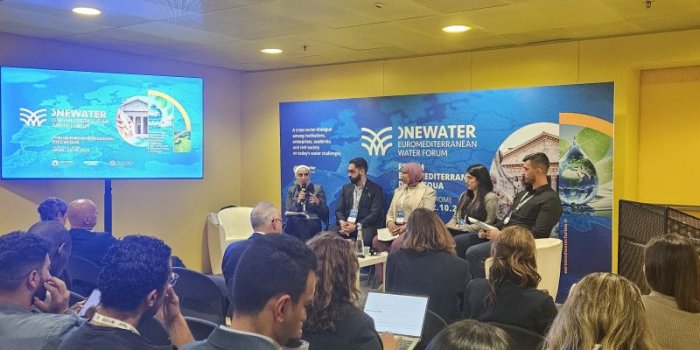
From 29 September to 2 October 2026, Eng. Salsabeal Abo-Thrais represented the Royal Scientific Society - WANA Institute at the Euro-Mediterranean Water Forum in Rome, where she was a panellist in the special session "Water Across Generations", one of five young leaders exploring the question: "Looking towards 2050, how does your generation envision the future of water in the Mediterranean and Balkan regions, and how should it be held accountable?"
The dialogue brought young professionals from Jordan, Egypt, Morocco, Albania and Tunisia together with H.E. Prof. Hani Sewilam, Egypt's Minister of Water Resources and Irrigation, and Ms Gaia Checcucci, Secretary General of the Northern Apennines District Basin Authority. Eng. Abo-Thrais outlined the region's core strains: deepening #waterscarcity, sectors planned in silos, and decisions taken after the crisis rather than before it. She called for institutionalising the WEFE Nexus, scaling up non-conventional water and efficiency, and connecting evidence to decisions that people trust.
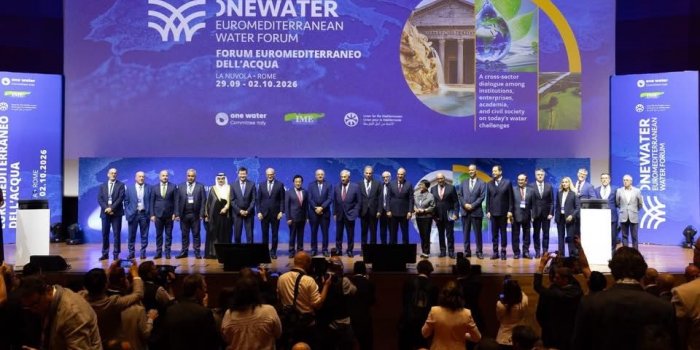
The session was part of a Forum that closed with over 5,000 registered attendees, around 700 speakers and more than 100 sessions, bringing together governments, international organisations, businesses, water utilities, researchers and civil society. The Forum opened immediately a day after the Second UfM Ministerial Declaration on Water, adopted in Rome on 28 September under the co-presidency of Jordan, represented by H.E. Eng. Raed Abu Soud, Minister of Water and Irrigation. The Declaration sets regional priorities to 2030 on the WEFE nexus, non-conventional water, anticipatory risk management, water finance, digitalisation, and youth and gender inclusion, and launched the Rome Initiative on Water to turn them into fundable projects. The Forum's closing underlined the same thread: an action plan on water that cuts across all sectors and gives space to every voice, especially local communities and the populations most exposed to scarcity and ecosystem degradation, supported by business engagement, new investment and more resilient infrastructure.